
While scrolling through your social media, you must at least once have come across those cupping therapy videos, where you see the purplish, painful-looking bruises left behind after each therapy session? But has it ever occurred to you why that is? Well, those purple circles left behind aren’t bruises from injury. They’re proof that something happened under your skin that most people never think to ask about. If you’ve booked a session of cupping therapy in Miami, FL, or you’re still deciding whether to try it, here’s the real answer to what’s going on beneath the surface once those cups go on.
The Physics Behind the Pull
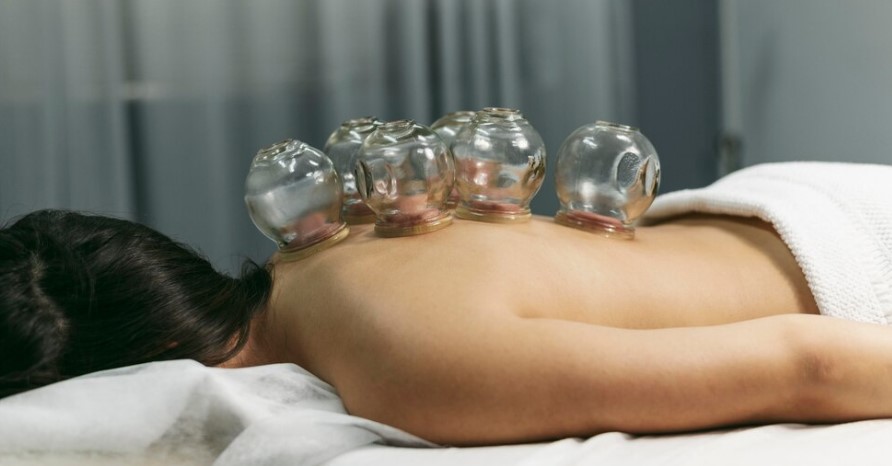
Cupping involves basic physics and isn’t mysterious. The practitioner places a small container over the skin and removes the air inside it, creating the vacuum. The vacuum thus created pulls the skin and the underlying layer of muscles into the cup, resembling the way a suction cup adheres to the bathroom tile. Everything is fine in theory, but the tissue being subjected to treatments is complex, and this makes the whole process interesting.
Every skin layer has blood vessels, nerve endings, and tough tissue connecting all body parts, called fascia. The system of suction works hand in hand with fascia and creates a stress that we don’t usually get in our daily life. Imagine a rubber band that remained folded for weeks and is finally straightened – fascia works in the same way.
What the Marks Actually Mean
Now for the part everyone notices first: the marks. You see underneath the cup, capillaries respond to that sudden pressure change, and a few of them widen. A few of the smallest ones rupture just slightly, and that’s what leaves the round mark behind. It isn’t a bruise in the way a bump against a table leaves a bruise. It’s a sign that blood rushed into an area that hadn’t been getting much circulation for a while.
Fresh blood brings oxygen and nutrients with it. Once it reaches a tight muscle, it starts flushing out the metabolic waste sitting in that tissue, sometimes for months. Clients often describe the day after as feeling similar to a deep massage: sore first, loose after. People who come in specifically for acupuncture and cupping therapy tend to say the treated spot feels lighter within a day or two, almost like something got untied.
The Nervous System Gets Involved Too
There’s a nervous system piece to this too, and it doesn’t get talked about enough. Skin is loaded with nerve receptors, and cupping fires them directly. Your nervous system decides how much tension your muscles carry around, so when the cup stimulates the skin’s surface, it sends the brain a signal to dial down an overactive stress response. That’s a big reason people walk out calmer than they walked in.
It’s also why cupping gets paired with acupuncture so often instead of standing alone. Acupuncture works on specific points along the body’s meridians using thin needles, aiming to balance energy flow at precise locations. Cupping covers more ground, pulling on broader areas of muscle and fascia at once. Put them together, and you get both: pinpoint accuracy from the needles, wider coverage from the cups. That combination is why so many people search for acupuncture and cupping therapy as a pair rather than picking one.
The Lymphatic System’s Quiet Job
One more system does quiet work during a session: the lymphatic system. Blood has the heart to push it along. Lymph doesn’t have that luxury; it depends on muscle movement and pressure shifts to keep moving at all. The vacuum from a cup gives stagnant lymph fluid a shove toward drainage points, carrying cellular waste out and easing puffiness in areas that have been swollen or inflamed.
Anyone sitting at a desk for eight hours a day knows the feeling of stiffness settling into the shoulders and lower back by 3pm. That’s slowed circulation and stuck lymph fluid working against you. A session of cupping therapy in Miami, FL, gives that fluid somewhere to go, which explains why so many first-timers notice a real difference within days, not weeks.
Why Some Marks Fade Faster Than Others
But why do marks disappear more quickly on some people than on others? It has much to do with how stagnant an area was before the treatment. Areas with poor blood circulation or long-term tension have dark marks that may last for a couple of weeks. Areas that already have some amount of good circulation clear a lot faster. Instead of fretting about the color, look at marks as a guide.
What Repeated Sessions Do Differently
A single session might have short-lived results. Multiple treatments spaced apart will complement each other. When regularly stretched, fascia keeps being more adaptable over time, and well-circulated muscles remain relaxed in between visits. Most practitioners ask their patients to wait a week or two between sessions to give the tissues time to recuperate instead of being treated once again.
While trying to recover from injuries, chronic pain, or strain from a physically demanding job, one should return to a single session that provides temporary benefits. Multiple sessions done after short periods of time will complement each other. With periods of regular stretching, fascia can be more flexible for a long time, and muscles that have been given good blood circulation can relax.
Not All Cupping Looks the Same
Not every cupping session looks alike, either. Dry cupping, the version most people picture, uses nothing but suction, no needles, no cutting. Fire cupping briefly uses a flame to pull the oxygen out of the cup before it touches the skin, creating that vacuum through heat instead of a pump. Moving cupping skips the stationary approach entirely; the cup glides across oiled skin, spreading the effect over a wider area and leaving lighter, more scattered marks instead of distinct circles.
The mechanics shift slightly with each method, but the underlying process stays the same: pressure changes, blood rushes in, fascia loosens. A practitioner offering cupping therapy in Miami, FL, usually picks the technique based on where the tension sits. A stiff upper back often calls for stationary cups held in place for several minutes. A larger area like the thighs or calves tends to respond well to the moving version.
Who Tends to Benefit Most
Cupping is not something that is only meant for athletes and people with serious injuries. Cupping is beneficial for those who are working in offices and are suffering from neck and shoulder pain. Cupping is beneficial to people recovering from minor injuries to help get blood moving. Moreover, even people with normal stress can sleep better, thanks to cupping.
However, cupping is not for everyone. There are some skin conditions, clotting problems, and pregnancy that require consultation with a doctor prior to signing up for a procedure. A reputable clinic always asks questions about medical history before giving an appointment, as the same suction that is beneficial for a muscle in recovery can be too much for the tissue that requires a tender treatment.
What to Expect Afterward
Acquire some tenderness in the treated area in the days that follow the procedure, as if it were sore muscles. Drinking water greatly aids in clearing away what circulation has just shifted around, and avoiding heavy exercise that day allows the tissue to settle down. A heating pad, warm shower, or light stretch will usually ease any remaining discomfort. There is nothing alarming about any of this. It’s merely the body processing what took place.
The Bottom Line
Cupping isn’t ancient guesswork dressed up as a wellness trend. Underneath every session sits real biology: circulation kicking back on, fascia loosening its grip, a nervous system getting told to relax. Once you know what’s actually happening beneath the surface, those purple marks stop looking mysterious and start looking like exactly what they are, proof that your body just got some long-overdue attention.
